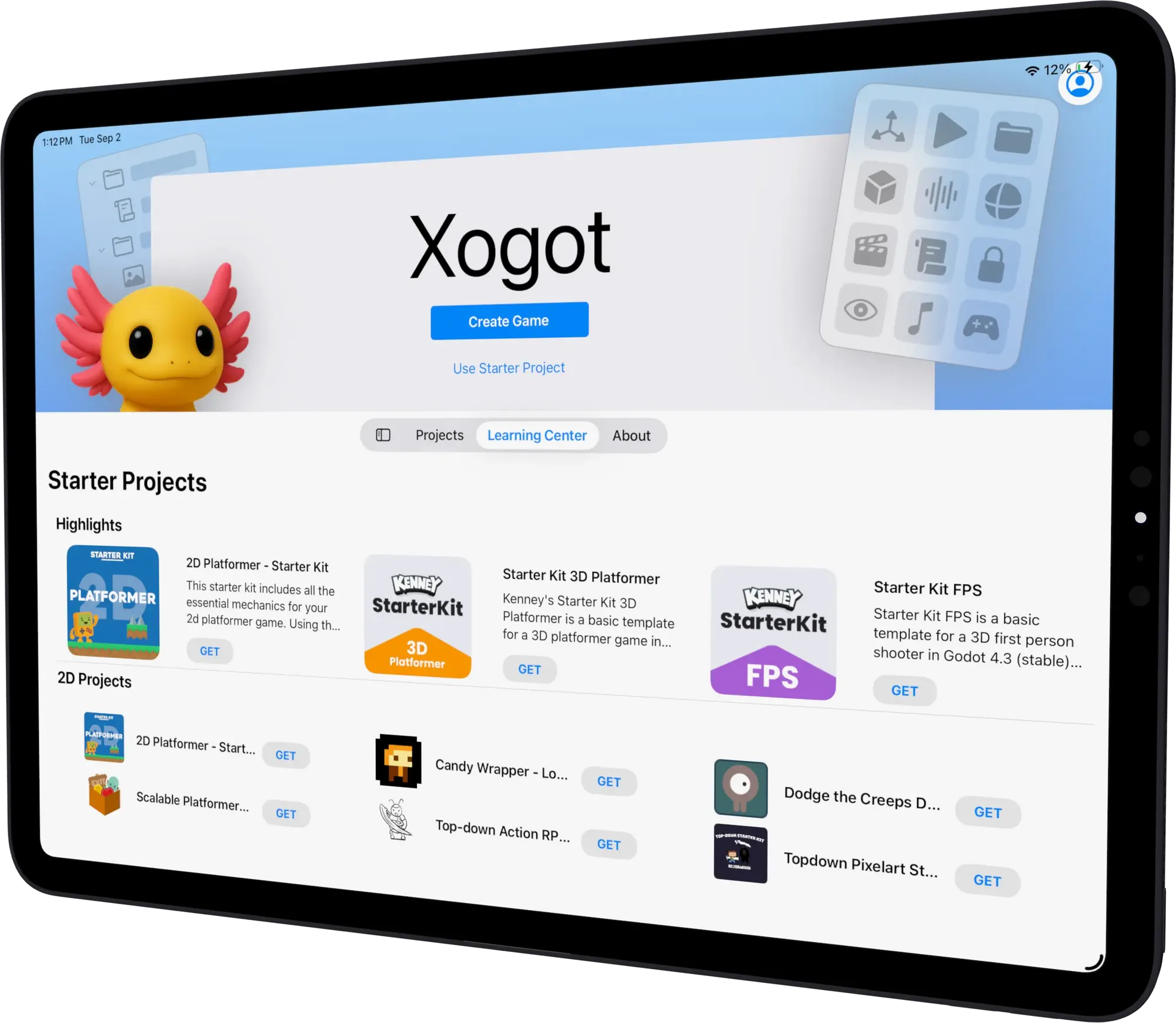
Get full access to Xogot for one year—completely free.
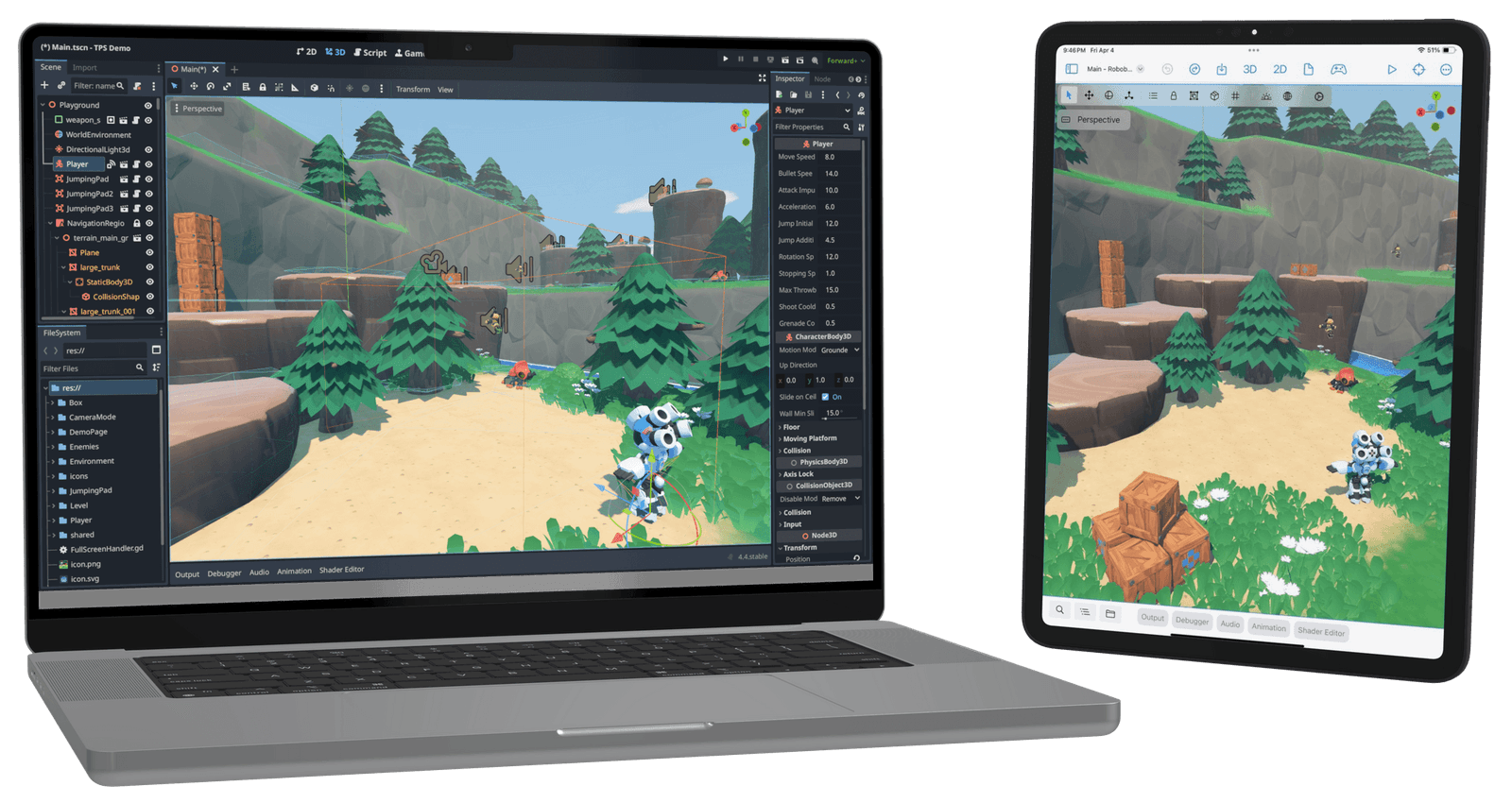
Bring worlds to life with Godot's powerful 3D tools, including a comprehensive scene system, advanced lighting, and flexible scripting
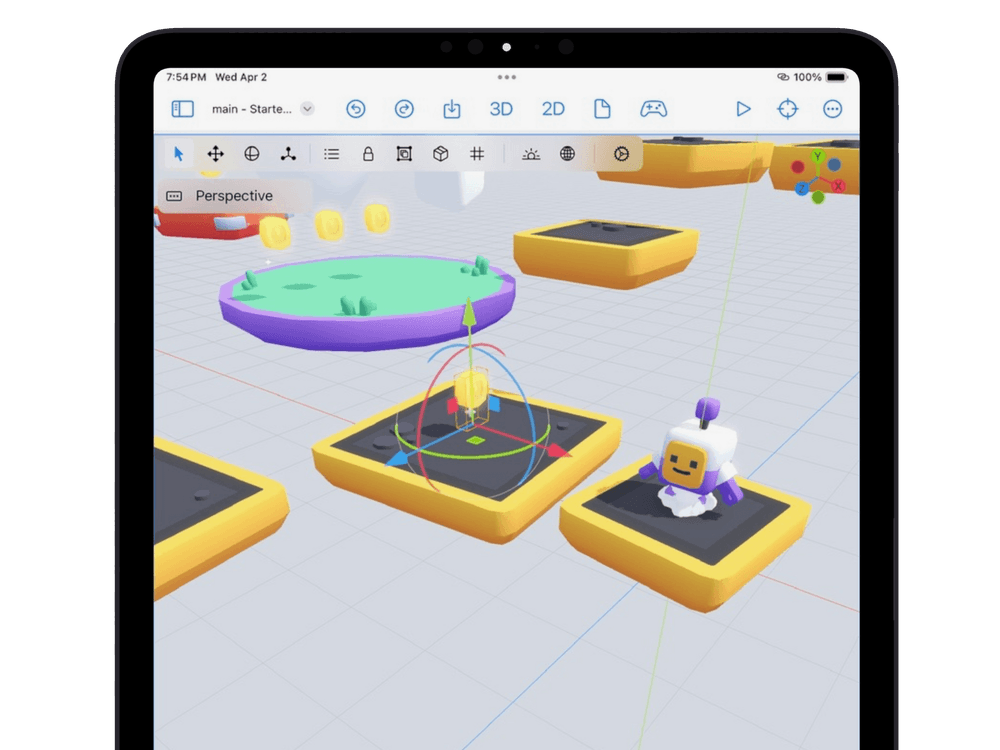
Create games that pop with approachable 2D game development tools including tile map editor, scalable layout, and a dedicated 2D pipeline
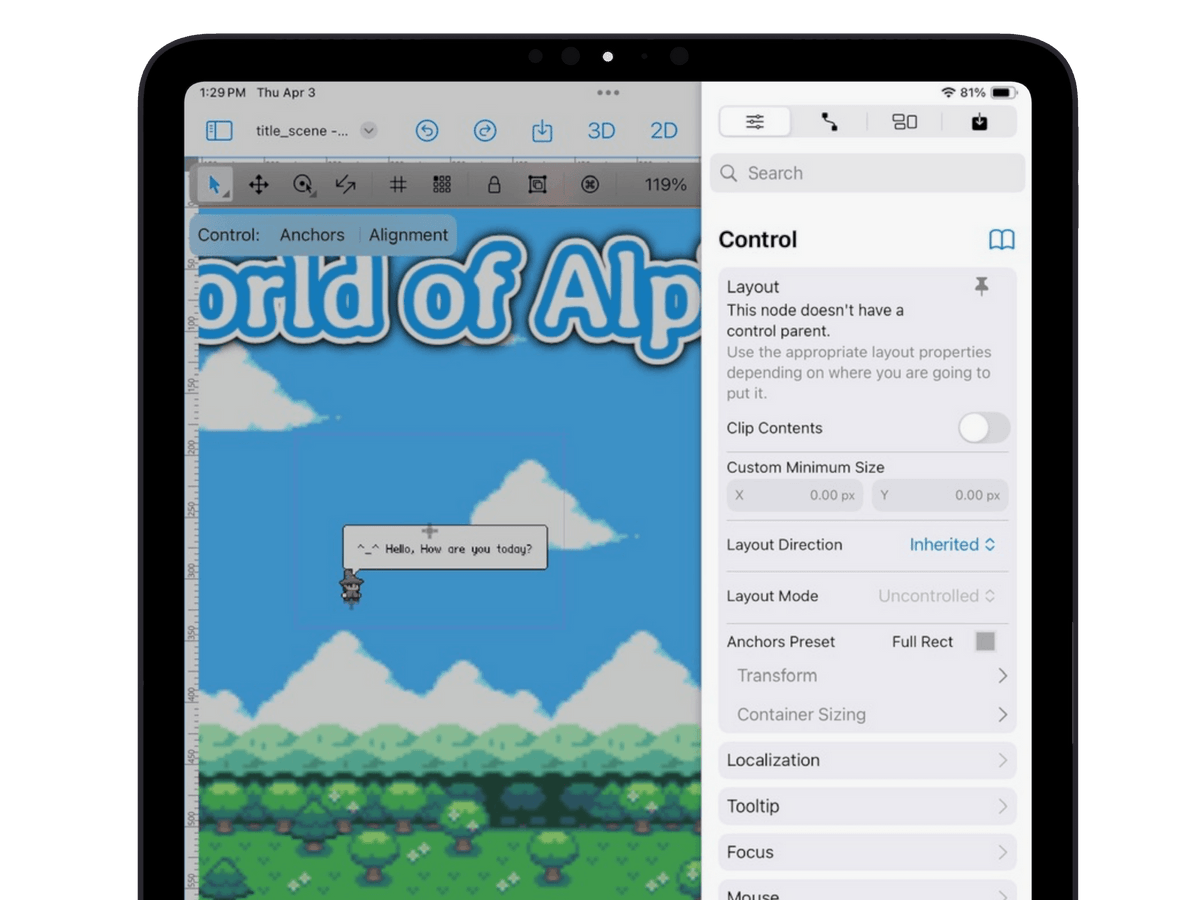
Animate characters, UI, and more with timeline-editing built for touch
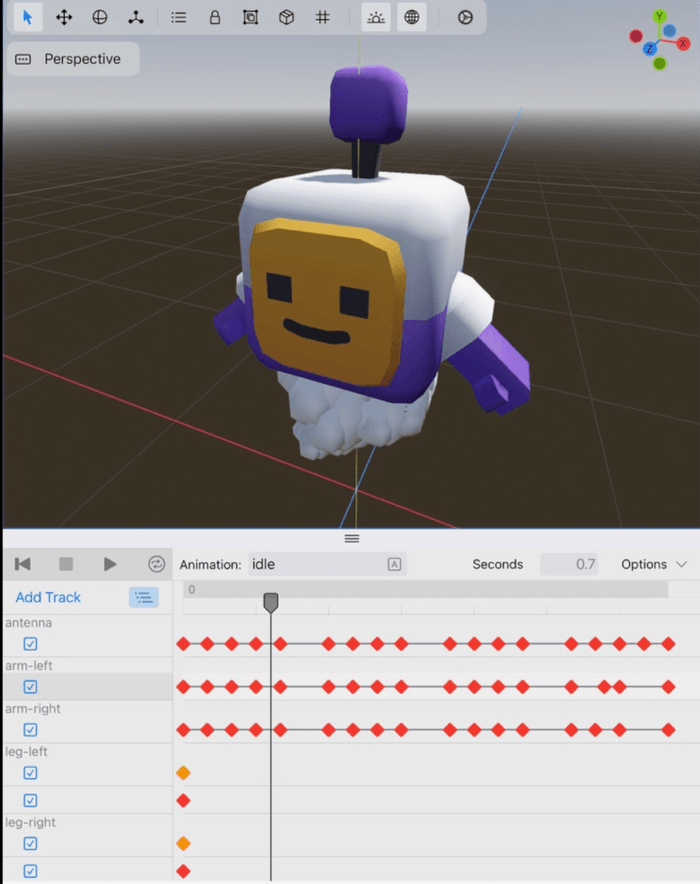
Select and inspect scene nodes - and interact with the editor - while running the game

Powered by Godot, the powerful, and popular, open source game engine, distribute your games with a runtime that is not encumbered by commercial redistribution restrictions

Built for Touch
Xogot embraces iPad and iOS conventions to give you a smooth, native experience that feels right at home on your favorite device
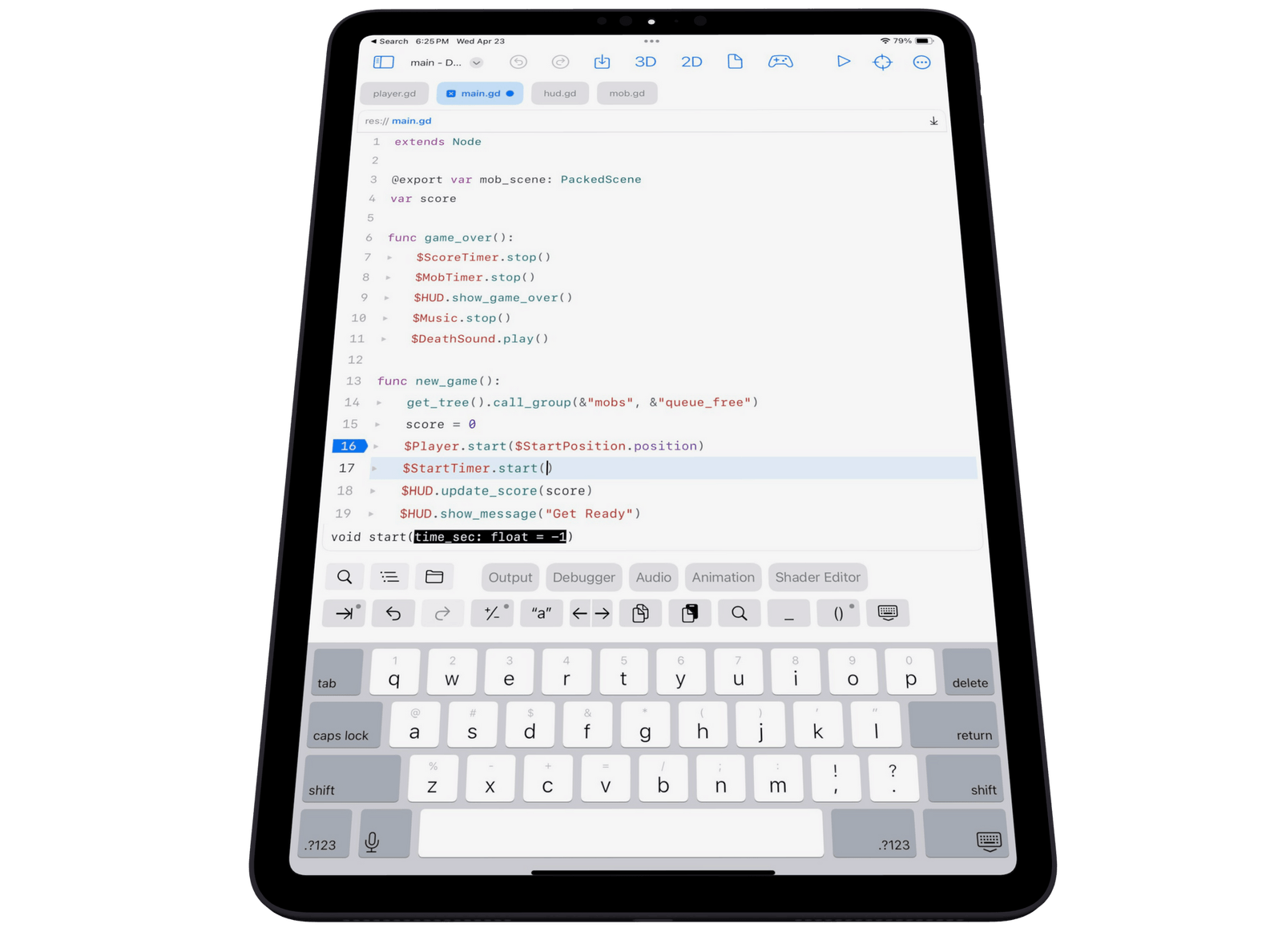
Xogot's code editor is 100% native to enable maximum productivity when composing game logic in GDScript
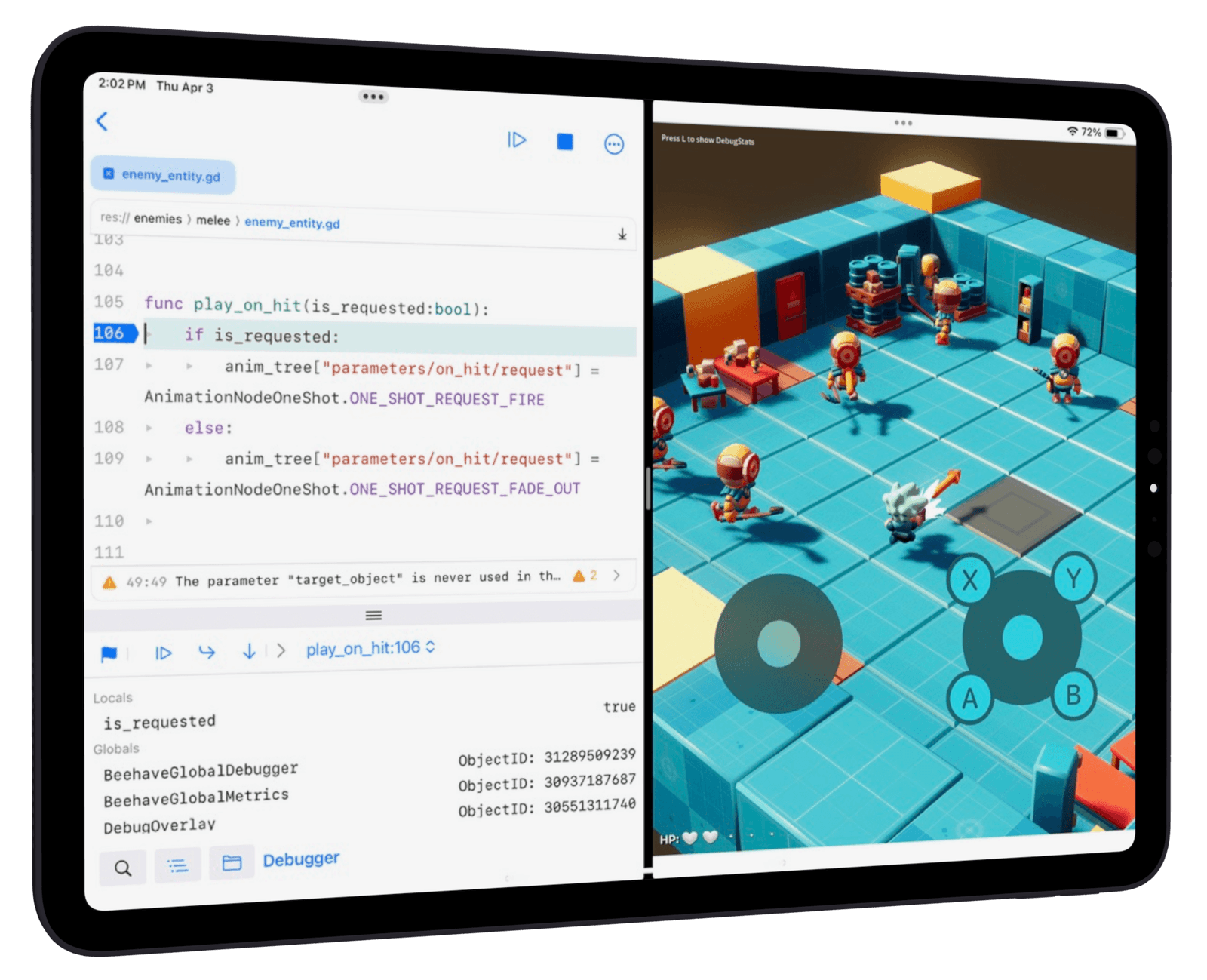
With a fully-integrated debugger, you can set breakpoints, explore your program state and even profile key parts of your game directly on your iPad or iPhone



Export to WebAssembly and share your game with a link — playable in any modern browser, on any device.
Or, use Godot on the desktop to publish to iPhone, iPad, Android, Windows, Steam, consoles, and more.

Use Stage Manager to split your work across multiple displays on iPad Pro or iPad Air
Code on one screen, test and design on another.
Arrange windows and tools to suit your style.

Import projects from iCloud, USB drives, or GitHub (via Working Copy) and keep building on the go.

Edit 2D and 3D scenes in fine detail with Apple Pencil

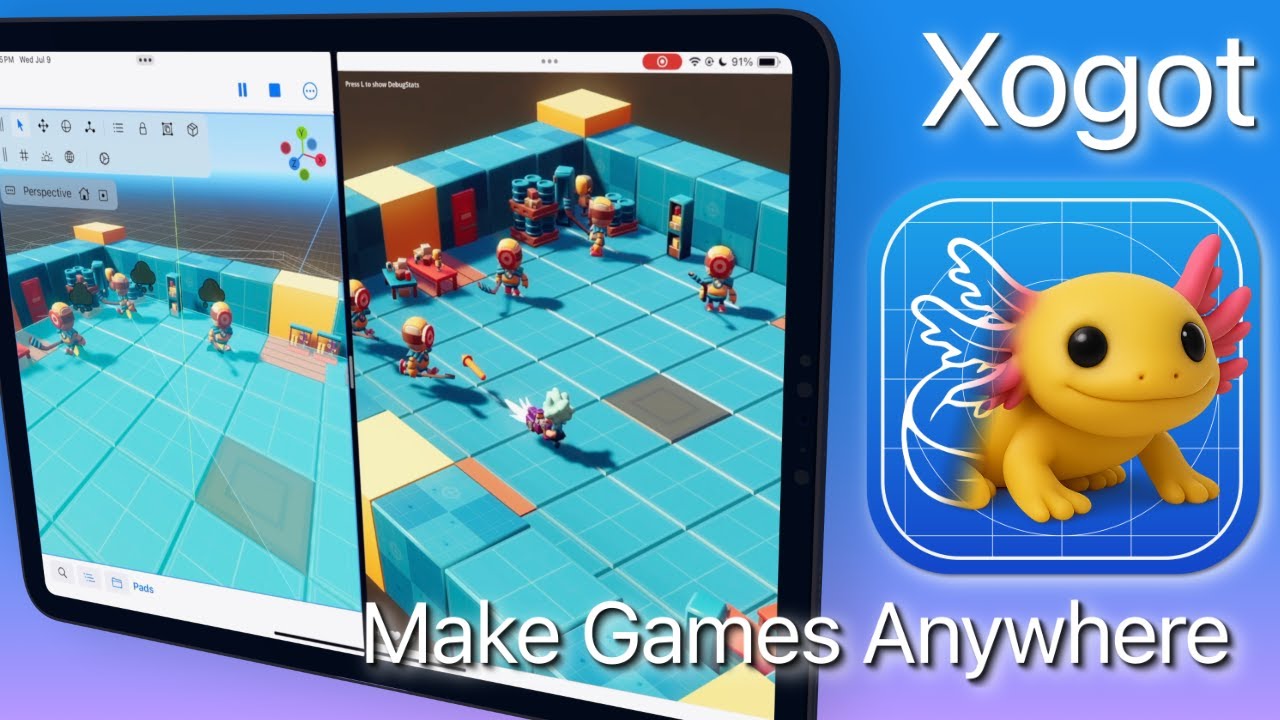
Make Games Anywhere with Xogot
See what’s possible with Xogot, the iPad and iPhone native version of the Godot game engine.
Early attempts at adult content were often characterized by "soft-core" scenes incorporated into otherwise formulaic thrillers or comedies. These films were popular in smaller rural theaters but often met with criticism from mainstream film critics.
– Adult Romance
Historically, Sri Lankan cinema was rooted in family-centric dramas and conservative storytelling. However, as the film industry faced a decline due to the rise of television and political instability, filmmakers began exploring adult themes to lure audiences back to theaters. This era saw the emergence of the "adults only" label as a marketing tool, yet beneath the commercial surface, directors like Ashoka Handagama and Prasanna Vithanage used the medium to dismantle social taboos. For instance, films such as
The niche for adult-themed cinema in Sri Lanka is in a state of transition. As digital access expands, filmmakers will likely continue to explore mature themes while navigating the complexities of cultural sensitivities and evolving regulations. This segment represents a notable shift in the local media landscape, reflecting an audience interest in narratives that address the adult experience in their native language. sinhala 18 films
The stories behind Sinhala 18 films often involve intense battles with censorship. Filmmakers have accused authorities of moral policing, while the state has defended its actions as protecting cultural values and public morality. The saga of Aksharaya is the most prominent example, but it is far from the only one. For instance, the film was eventually passed in 2010, but only after the censor board demanded "less drastic edits".
More recent films have moved toward "Adults Only" ratings due to their realistic portrayal of modern relationships, infidelity, and urban life, rather than just for "shock value." Him, Hereafter)
However, the role of censorship in Sri Lanka has always been a subject of intense debate. Critics have long argued that the PPB’s methods are a form of state-sponsored censorship that discourages creative expression. This is particularly true for films that challenge social, cultural, and political norms. In late 2023, the government signaled a major shift by announcing plans to replace the Public Performances Board with a new 'Public Performances Classification Board', a move aimed at fostering a culture of free expression devoid of censorship. This proposed change marks a potential new chapter for the nation's film industry, including the future of adult-oriented cinema. Early attempts at adult content were often characterized
These productions are subject to evaluation by local censorship boards, highlighting the balance between artistic expression and public standards.
Unfortunately, the term "Sinhala 18 film" has a darker, more commercial connotation. In the 1990s and 2000s, a wave of low-budget "B-grade" films exploited the 18+ rating purely for soft-core pornography. These films, often starring minor actresses who would later vanish from the industry, relied on extended "kanda 18" (neck-down) sequences, crude comedy, and shaky plots about "modeling agencies" or "hostels."
Here is a breakdown of the most significant categories and notable films within this space: 1. The "Golden Age" of Adult Social Dramas However, as the film industry faced a decline
Sri Lanka has a state-controlled censorship mechanism that wields significant power over what reaches the public. is a prime example. The film was censored by the government, reportedly due to its stark depiction of gender violence and corruption. A columnist for Colombo Telegraph sharply criticized the board’s selective morality, noting, “You cannot class it as Porn as we have seen so many cheap flick Sinhala movies featuring Sumana Gomez of Age Wairaya fame with terrible gender violence being shown in cinemas and where was the so moralistic Govt Censor board at that time?”.
In the landscape of Sri Lankan cinema, the term carries a weight that goes far beyond a simple age restriction. For decades, the "18" label—equivalent to an "R-rated" film in the West or a "Category III" in Hong Kong cinema—has been a gateway to mature, controversial, and often misunderstood storytelling. While global audiences associate adult ratings with graphic violence or explicit sexual content, the journey of Sinhala cinema's "18" films tells a unique story of cultural resistance, artistic expression, and the eternal struggle between censorship and creative freedom.