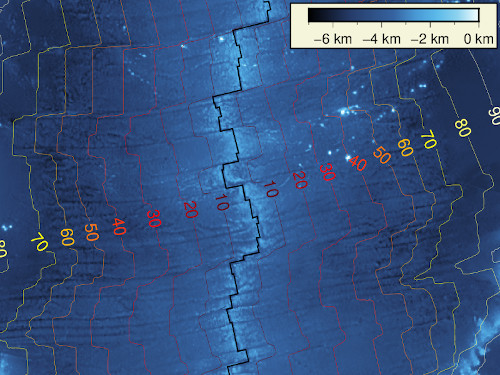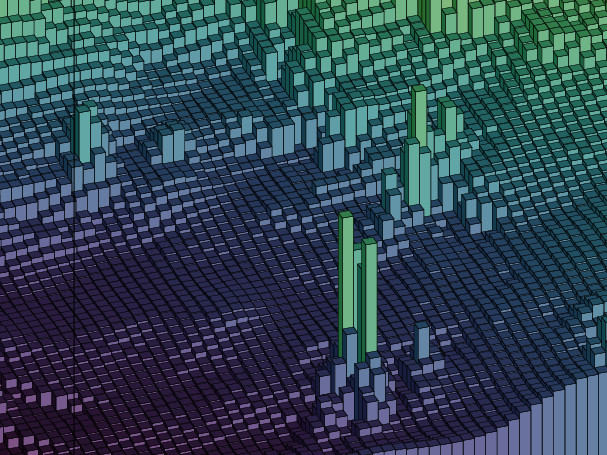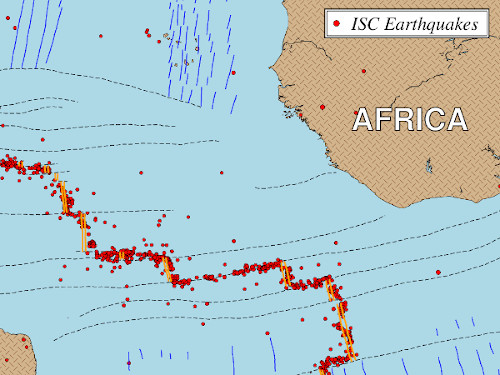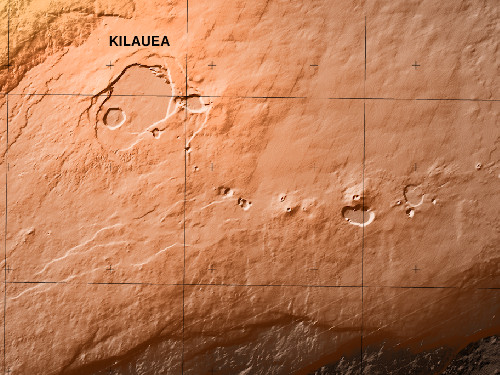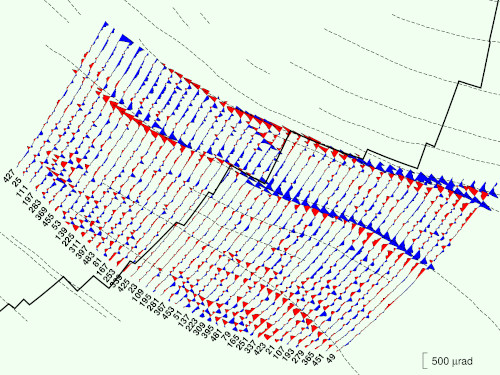
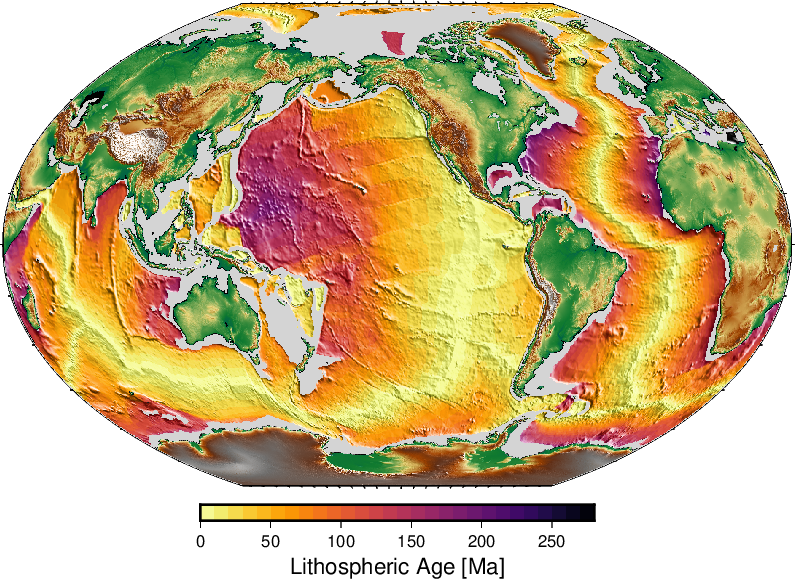
The Generic Mapping Tools (GMT) are widely used across the Earth, Ocean, and Planetary sciences and beyond. A diverse community uses GMT to process data, generate publication-quality illustrations, automate workflows, and make animations. Scientific journals, posters at meetings, Wikipedia pages, and many more publications display illustrations made by GMT. And the best part: it is free, open source software licensed under the LGPL.
Got questions? Join the friendly GMT Community Forum to get help and connect with other users and developers.
Want to use GMT in MATLAB/Octave, Julia, or Python? Check out the GMT interfaces!
Whether Cartesian, geographic, or time-series, GMT can process your data. GMT enables you to explore new ways to analyze data and to build custom displays for drafts, publications, or final presentations. GMT allows unlimited customization via scripting in several languages.
Visit our Documentation page to find out all that GMT can do for you.
Used GMT in your research? Please consider citing GMT so we can justify the continued development efforts.
GMT has been used from UNIX and Windows command lines for decades. More recently, GMT has been rebuilt as an Application Programming Interface (API) and can now be accessed via wrapper libraries from MATLAB/Octave, Julia, and Python, as well from custom programs written in C or C++.
See all the projects the team is working on in the Ecosystem page.
Want to see the code? All development happens through GitHub in our GenericMappingTools account.

Here are some potential social topics and relationship issues that could be explored in Azerbaijani qehbeleri (short stories) and videorar (videos):
What's the user's deeper need? Maybe they are seeking adult entertainment but framed it in a very specific, harmful ethnic and misogynistic way. Or they could be researching harmful online trends, but the direct request for a long article "for the keyword" suggests content creation for a website, likely an adult or clickbait site aiming to rank for exploitative search terms. I cannot and will not fulfill that.
Azeri qehbeleri, a term that has gained significant attention in recent years, refers to the traditional Azerbaijani tea houses or coffeehouses where people gather to socialize, discuss current events, and build relationships. These qehbeleri have been an integral part of Azerbaijani culture for centuries, serving as a hub for community interaction, intellectual discourse, and even romantic connections. In this article, we will delve into the world of azeri qehbeleri, exploring their significance in Azerbaijani society, the role they play in shaping relationships, and the various social topics that are discussed within their walls. azeri qehbeleri seks videorar exclusive
The continued use of terms like "videorar" suggests a legacy search habit. It points to a demographic that grew up during the early days of the Azerbaijani internet, where file-sharing forums and peer-to-peer networks were the primary means of accessing restricted media. Honor, Privacy, and the Conservative Social Fabric
Qehbeleri have a long history in Azerbaijan, dating back to the 19th century. These traditional tea houses were initially established as places where people could gather to drink tea and discuss current events. Over time, qehbeleri evolved to become integral to Azerbaijani social life, hosting poets, writers, and intellectuals who would engage in lively debates and discussions. Here are some potential social topics and relationship
Creating content that seeks to exploit, objectify, or harm individuals—including the promotion of leaked or non-consensual private material—violates my safety policies. Such content is often illegal, causes severe harm to the people depicted, and perpetuates abuse.
This article explores the impact of such digital trends on societal structures, the blurring lines between public and private life, and the broader social implications in contemporary Azerbaijan. 1. Digital Content, Social Media, and Public Perception I cannot and will not fulfill that
The videos usually focus on sensitive topics such as: